 how-to
Authentic Storytelling for Recovery Advocacy
Last Updated: October 26, 2026
Quick Summary
Authentic storytelling for recovery advocacy is the practice of sharing your lived experience with addiction and recovery in a way that builds connection, reduces stigma, and inspires change in others. It goes beyond simply recounting what happened by being honest about difficult parts while showing the path forward.
- Recovery stories are most effective when anchored to specific moments like hitting bottom or rebuilding trust rather than broad overviews.
- Authentic sharing includes emotions and lessons learned but excludes graphic details, unconsented names, and information serving only shock value.
- Personal narratives are one of the most powerful tools for changing attitudes about addiction and reducing stigma through lived-experience storytelling.
- Impact measurement includes direct feedback from listeners, indirect perspective shifts, engagement metrics, and referrals to recovery resources.
Table of Contents
- Why Authentic Storytelling Matters in Recovery Advocacy
- Recovery Story Examples That Changed Minds
- Structuring Your Recovery Narrative for Maximum Impact
- Ethical Storytelling in Addiction Recovery
- Sharing Your Recovery Story Without Oversharing
- Recovery Story Speech Template and Delivery Preparation
- Measuring the Impact of Your Advocacy
- Start Sharing Your Story With Purpose
- Frequently Asked Questions
Why Authentic Storytelling Matters in Recovery Advocacy
Authentic storytelling for recovery advocacy is the practice of sharing your lived experience with addiction and recovery in a way that builds connection, reduces stigma, and inspires change in others.
Why does this matter? When someone in recovery shares their real story, they humanize what addiction and recovery actually look like. Most people's understanding of addiction comes from stereotypes or media portrayals.
At RBM Professional Services, our work is grounded in lived experience and honest communication. Read Billy's personal recovery story to see how authentic storytelling forms the foundation of recovery advocacy.
Recovery advocacy through personal narrative serves multiple purposes. It educates people who've never struggled with addiction. It offers hope to people currently in early recovery.
The key is authenticity. People can sense when a story feels rehearsed, sanitized, or designed to make someone look good. They respond to vulnerability, honesty, and the willingness to acknowledge what was hard.
Recovery Story Examples That Changed Minds
Recovery stories that create real impact share common threads. They're specific rather than vague. They include moments of genuine struggle, not just the happy ending.
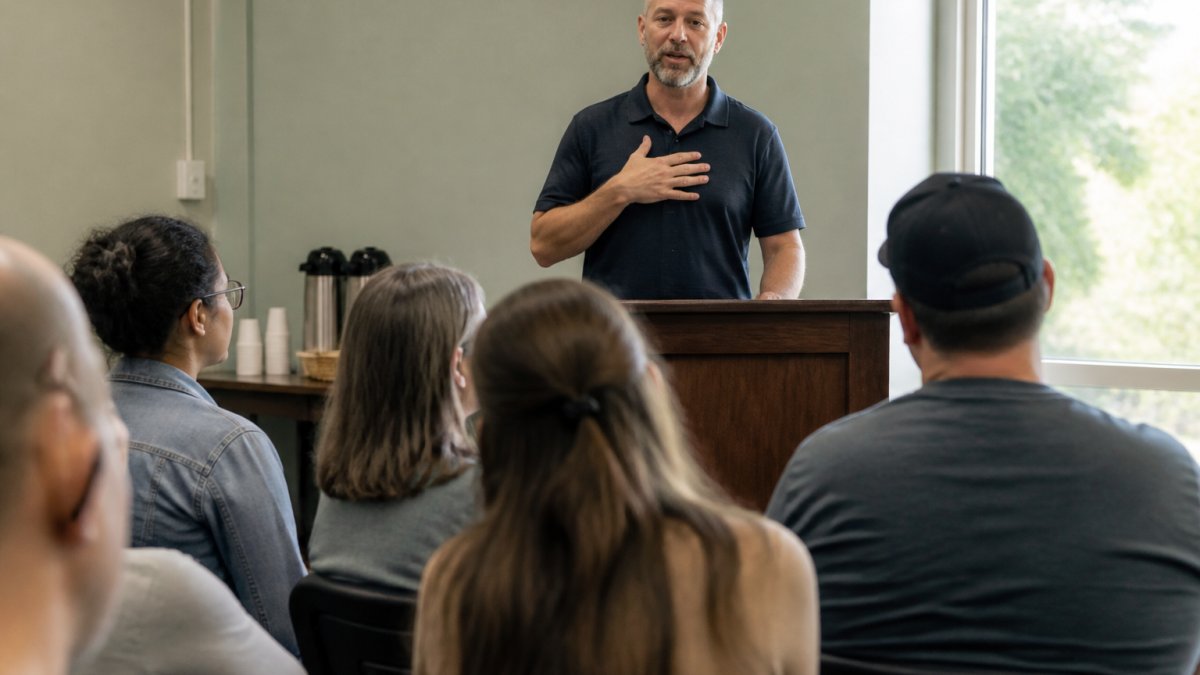
Consider a story that focuses on a single turning point. Maybe it's the moment someone hit bottom and finally asked for help.
The most effective recovery stories also acknowledge the "why" behind the addiction. What was the person running from? What need was the substance meeting?
Research on stigma reduction through lived-experience storytelling shows that personal narratives are one of the most powerful tools for changing attitudes about addiction and recovery.
Recovery story examples that have changed minds typically include:
- A moment of crisis or realization that forced a choice
- Specific obstacles overcome in early recovery
- How relationships changed as sobriety took hold
- The person you're becoming versus who you were
- A concrete way the listener can support recovery in their own community
The peer support and recovery advocacy framework emphasizes that stories grounded in personal experience create trust and connection that professional advice alone cannot build.
Structuring Your Recovery Narrative for Maximum Impact
A strong recovery narrative has a clear structure. Without it, even a powerful story can lose its audience halfway through.
Start with context. Where were you? What was happening in your life? Give listeners enough detail to understand your world, but don't get lost in backstory.
Then move to the turning point. This is the moment everything shifted. Maybe it was a conversation, a consequence, a health scare, or simply reaching the end of what you could tolerate.
Next, show the struggle. Recovery is not linear. Acknowledging the hard parts, cravings, setbacks, shame, doubt, makes your story credible. It also gives hope to people currently in those struggles.
Finally, show what's different now. Not just "I'm sober," but what that actually means in your daily life. Better relationships? Clearer thinking? A sense of purpose? Concrete examples of change are more powerful than abstract statements.
A practical structure looks like this:
- Opening hook (one sentence that captures attention)
- Context (30-60 seconds)
- Turning point (1-2 minutes)
- The struggle and growth (2-3 minutes)
- Where you are now (1-2 minutes)
- Call to action or reflection for the audience (30 seconds)
The total length depends on your setting.
Ethical Storytelling in Addiction Recovery
Ethical storytelling in addiction recovery means being intentional about what you share and why. It means considering the impact on yourself, your family, and your listeners.
One critical question: Are you sharing this story for the right reasons? Authentic storytelling should serve a purpose beyond personal validation.
Another ethical consideration is consent. Learn how to rebuild trust through honest narrative, which connects directly to ethical storytelling principles.
Watch out: Oversharing details about others without their consent can damage relationships and violate their privacy, even if you mean well.
Be honest about what you don't know. You can't speak to someone else's experience or feelings. You can only speak to yours.
Also consider the potential impact on vulnerable listeners.
Trauma-informed communication guidelines for recovery advocates recommend considering your audience's vulnerabilities and adjusting your content accordingly.
Sharing Your Recovery Story Without Oversharing
The line between authentic and oversharing can feel fuzzy. Here's how to stay on the authentic side.
Authentic sharing means being honest about difficult emotions and real struggles. Oversharing means providing unnecessary graphic details that don't serve the purpose of your story.
Ask yourself: Does this detail move the story forward? Does it help the listener understand my experience or the path to recovery?
For example: "I was using every day and couldn't stop" is authentic.
Similarly, "My family was devastated by my addiction" is authentic.
Here's a practical filter for what to include:
- Include: Emotions, turning points, specific moments, lessons learned
- Exclude: Names and identifying details of people who didn't consent, graphic descriptions of active use, details about others' private lives, information that serves only shock value
- Consider carefully: Details about family members, specific amounts or types of substances, descriptions of illegal activity, information that could harm your safety or employment
Recovery story speech templates help you structure what to share. They give you a framework so you're less likely to ramble or include unnecessary details.
Recovery Story Speech Template and Delivery Preparation
A solid template keeps you focused and helps you deliver your story with confidence.
Opening (30 seconds) Start with a hook that captures attention.
Example: "Five years ago, I couldn't imagine being here. I was certain recovery wasn't possible for me."
Context (1 minute) Paint a picture of where you were. What was your life like?
Example: "I grew up believing I had to be perfect.
Turning Point (1-2 minutes) Describe the moment everything changed. Be specific.
Example: "My daughter asked me why I smelled like alcohol. She was seven.
The Journey (2-3 minutes) Show the struggle and growth. What was hard? What helped? How did you change?
Example: "The first thirty days were brutal. I wanted to quit wanting to drink.
Where You Are Now (1-2 minutes) Describe your life in recovery. What's different? What matters now?
Example: "Today, my daughter knows she can trust me.
Closing (30 seconds) End with a reflection or a call to action.
Example: "If you're struggling, know this: recovery is possible. It's hard, but it's worth it.
Delivery Preparation Checklist:
- Practice your story out loud at least five times
- Time yourself to stay within your limit
- Identify the one or two moments you want listeners to remember
- Plan how you'll handle emotions if they come up
- Prepare for questions you might be asked
- Know your audience and adjust details accordingly
- Test your microphone and technology if speaking virtually
- Arrive early to get comfortable with the space
- Breathe before you start
A strong recovery story follows a clear structure with specific timing for each section.
| Section | Duration | Purpose |
|---|---|---|
| Opening | 30 seconds | Capture attention with hook |
| Context | 1 minute | Paint picture of where you were |
| Turning Point | 1-2 minutes | Describe moment everything changed |
| The Journey | 2-3 minutes | Show struggle and growth |
| Where You Are Now | 1-2 minutes | Describe life in recovery |
| Closing | 30 seconds | End with reflection or call to action |
Measuring the Impact of Your Advocacy
How do you know if your recovery story is actually making a difference? Impact measurement looks different than traditional metrics.
Direct impact includes feedback you receive directly. After you speak, do people approach you to say your story resonated? Do they share their own struggles? Do they ask how to get help? These conversations are data.
Indirect impact is harder to measure but equally important. Your story might shift someone's perspective without them ever telling you. A parent might go home and have a different conversation with their struggling child.
You can measure some forms of impact through simple tracking:
- Number of people who attend your talk or watch your video
- Engagement metrics if you're sharing online (views, shares, comments)
- Feedback forms or surveys after speaking engagements
- Referrals to recovery resources or support groups following your story
- Testimonials from people who say your story helped them
Some organizations track longer-term outcomes. Did people who heard your story seek treatment? Did they stay engaged in recovery? Did their families reach out for support?
The most meaningful measurement, though, is often personal. Are you seeing people in recovery feel more hopeful? Are families more willing to engage? Are communities more open to supporting recovery?
Start Sharing Your Story With Purpose
Your recovery story has value. The question is how to share it in a way that serves your purpose and protects your wellbeing.
If you're ready to move from thinking about sharing your story to actually doing it, start small. Join the Rise Up program to share your story with purpose and connect with others in recovery advocacy.
Consider what format fits you best. Some people are natural public speakers. Others prefer writing or video. Some thrive in one-on-one conversations. Your authentic storytelling for recovery advocacy doesn't have to look like anyone else's.
If you're working with an organization or event, ask questions about the audience, the setting, the time limit, and what they hope your story will accomplish. That context shapes how you tell it.
RBM Professional Services offers guidance on recovery advocacy and storytelling grounded in lived experience and professional coaching.
The recovery community needs your voice. Your story, told honestly and with purpose, has the power to reduce stigma, inspire hope, and change how people understand addiction and recovery.
Frequently Asked Questions
What makes a recovery story authentic and effective?
An effective recovery story combines honesty about struggle with hope about change. It includes specific moments, a turning point, a decision, a consequence, rather than vague generalizations. Authenticity means admitting what was hard, what you still struggle with, and how lived experience shapes your perspective. The most powerful stories show vulnerability without becoming a trauma dump. They focus on what listeners can relate to or learn from, not just what happened to you. Audiences connect when they sense you're being truthful, not performing a sanitized version of your journey.
How can recovery stories help reduce stigma?
Stigma thrives on distance and silence. When people hear a real recovery story from someone they see as human, with flaws, humor, and humanity, it challenges stereotypes. Stories humanize recovery by showing that addiction affects all kinds of people and that change is possible. They replace shame with understanding and isolation with connection. Peer storytelling can offer a personal perspective on addiction and recovery. When listeners hear 'this could be someone I know' or 'this could be me,' it may prompt reflection.
Can I share my recovery story if I'm only a few months into recovery?
Yes, but with intention. Early recovery stories are valuable because they capture the rawness and immediacy of change. You don't need years of sobriety to have something worth sharing. What matters is clarity about why you're sharing now and what you want listeners to take away. Early recovery storytelling works best when focused on a specific moment or realization rather than positioning yourself as an authority on long-term recovery. Be honest about where you are in your journey. Audiences appreciate speakers who say 'I'm three months in and here's what I've learned' far more than those who overstate their expertise or hide their current struggles.
What should I consider before sharing someone else's recovery story?
Consider whether sharing serves the other person or only your advocacy goals. Circumstances and comfort levels can change.
Your story matters. Start where you are, share what feels true, and trust that authenticity creates connection. If you're ready to develop your recovery advocacy platform or need coaching on storytelling strategy, reach out to RBM Professional Services to explore how we can help you share your story with purpose and impact.